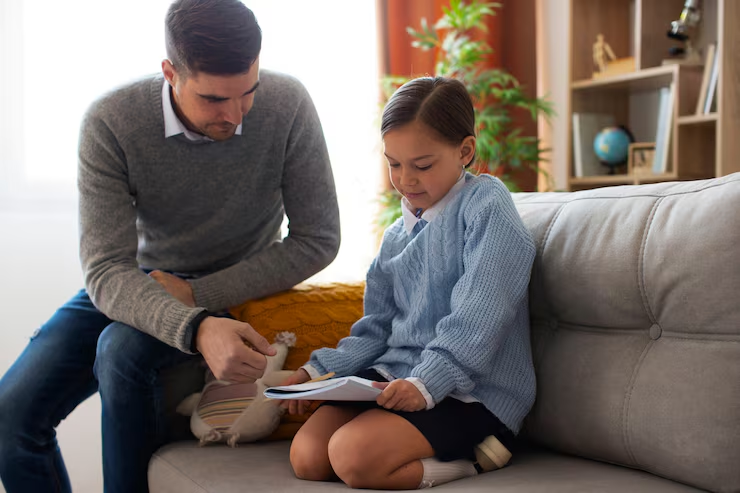
Most children experience occasional nervousness about school.
They may feel anxious before the first day of school, a big test, a presentation, or an important social event.
These feelings are a normal part of growing up.
However, for some children and teens, school becomes a significant source of ongoing stress and anxiety.
What starts as occasional nervousness can gradually develop into daily worry, emotional distress, physical symptoms, and even school refusal.
As a therapist who has worked with children, teens, and families for more than twenty years, I have seen firsthand how school anxiety can impact a child’s confidence, emotional well-being, academic performance, and relationships. The good news is that school anxiety is treatable, and there are many ways parents can help their children feel more confident and successful.
What Is School Anxiety?
School anxiety refers to excessive worry, fear, or emotional distress related to school.
While many children dislike certain aspects of school from time to time, children with anxiety often experience intense fear or worry that interferes with their ability to function comfortably and confidently.
School anxiety can affect children of all ages, from elementary school students to high school seniors preparing for graduation.
For some children, the anxiety revolves around academic performance. For others, it may be related to friendships, social situations, separation from parents, bullying, perfectionism, or fear of embarrassment.
Common Signs of School Anxiety
School anxiety often shows up differently than parents expect.
Many children do not directly say, “I feel anxious.”
Instead, they may communicate their distress through physical symptoms, emotional reactions, or changes in behavior.
Common signs of anxiety related to school include:
- Frequent stomachaches before school
- Headaches that occur on school mornings
- Difficulty sleeping on school nights
- Excessive worry about grades
- Fear of making mistakes
- Frequent reassurance seeking
- Crying before school
- Refusing to attend school
- Irritability or anger after school
- Difficulty concentrating
- Perfectionistic tendencies
- Complaints about feeling sick without a medical explanation
Parents are often surprised to learn that anxiety can present as irritability, defiance, or emotional outbursts rather than nervousness.
Why Are So Many Children and Teens Anxious About School?
School anxiety can develop for many different reasons.
Academic Pressure
Many children place tremendous pressure on themselves to succeed.
Some worry constantly about:
- Getting good grades
- Passing tests
- Completing assignments perfectly
- Meeting expectations from teachers or parents
Children who struggle with perfectionism are especially vulnerable to school-related anxiety.
Social Anxiety
Friendships become increasingly important as children grow older.
Many students worry about:
- Fitting in
- Being judged by peers
- Making friends
- Being left out
- Speaking in front of others
For some children, social concerns create more stress than academics.
Fear of Making Mistakes
Many anxious children become extremely uncomfortable with mistakes.
They may avoid participating in class, hesitate to try new things, or become upset when their work is not perfect.
These children often believe mistakes are evidence of failure rather than opportunities for learning.
Bullying or Peer Conflict
Even relatively minor peer conflicts can significantly affect a child’s emotional well-being.
Children who have experienced teasing, exclusion, or bullying may begin associating school with emotional discomfort and fear.
Family Stress or Life Changes
Divorce, separation, moving, grief, illness, or family conflict can make school feel more difficult to manage.
When children are carrying emotional stress outside of school, their ability to cope with everyday academic and social demands often decreases.
School Refusal and School Anxiety
One of the most challenging situations parents face is school refusal.
School refusal occurs when a child experiences significant distress related to attending school.
A child may:
- Cry before school
- Beg to stay home
- Complain of physical symptoms
- Refuse to get out of the car
- Become emotionally overwhelmed before school
Parents often feel confused because their child may seem perfectly fine once allowed to stay home.
This does not mean the anxiety is not real.
In fact, staying home temporarily reduces anxiety, which can unintentionally strengthen avoidance over time.
The longer school avoidance continues, the harder it often becomes to return.
How Parents Can Help a Child With School Anxiety
Parents play an important role in helping children manage anxiety.
Listen Without Immediately Fixing
When children share worries, our natural instinct is often to solve the problem.
Instead, start by listening.
Try responses such as:
- “That sounds really stressful.”
- “I can see why that would feel hard.”
- “Tell me more about what’s worrying you.”
Feeling understood helps children feel less alone.
Focus on Confidence, Not Reassurance
Parents often respond to anxiety by offering repeated reassurance.
While reassurance can be comforting, excessive reassurance sometimes feeds anxiety.
Instead of saying:
“Nothing bad will happen.”
Try saying:
- “You’ve handled difficult situations before.”
- “I believe you can get through this.”
These responses encourage confidence rather than dependence on reassurance.
Maintain Predictable Routines
Children with anxiety often benefit from structure.
Consistent routines around bedtime, mornings, homework, meals, and activities can help create a sense of safety and predictability.
Encourage Problem-Solving
Help children think through challenges rather than immediately solving them.
Ask questions such as:
- “What do you think might help?”
- “What has worked before?”
- “What’s one small step you could take?”
These conversations build confidence and resilience.
Celebrate Effort
Children with anxiety often focus on outcomes.
Parents can help shift the focus toward effort.
Praise:
- Courage
- Persistence
- Trying something difficult
- Asking for help
- Practicing coping skills
These are the skills that support long-term success.
Helping Teens Manage School Anxiety
Teenagers often experience school anxiety differently than younger children.
Many teens worry about:
- College admissions
- Grades
- Future careers
- Social relationships
- Extracurricular performance
Because teens are developing greater independence, they may not always share their worries openly.
Some warning signs include:
- Withdrawal from family
- Increased irritability
- Changes in sleep habits
- Perfectionism
- Avoidance of responsibilities
- Declining grades
- Increased stress or overwhelm
Parents can support teens by creating opportunities for conversation without pressuring them to open up.
Often, the most helpful approach is simply being available and consistently supportive.
When Should You Consider Counseling for School Anxiety?
Some anxiety is a normal part of life.
However, professional support may be beneficial if anxiety is:
- Affecting attendance
- Impacting academic performance
- Causing frequent emotional distress
- Interfering with friendships
- Affecting sleep
- Leading to avoidance of activities
- Creating significant stress within the family
Counseling can help children and teens identify anxious thought patterns, develop coping skills, improve emotional regulation, and build confidence.
For younger children, play therapy can provide a developmentally appropriate way to process worries and learn new skills.
Frequently Asked Questions About School Anxiety
Is school anxiety normal?
Yes. Many children experience some degree of school-related anxiety. Concern arises when anxiety begins interfering with daily functioning.
Why does my child get sick before school?
Anxiety often creates physical symptoms such as headaches, stomachaches, nausea, or fatigue. These symptoms are real even when no medical cause is identified.
What causes school anxiety?
School anxiety can be related to academics, social concerns, perfectionism, bullying, family stress, or major life changes.
How can I help my child stop worrying about school?
Listen with empathy, maintain routines, encourage problem-solving, focus on confidence-building, and seek professional support when needed.
Can therapy help school anxiety?
Yes. Counseling can help children and teens learn coping skills, reduce anxiety, improve confidence, and develop healthier ways of managing stress.
Final Thoughts
School should be a place where children learn, grow, and develop confidence. When anxiety becomes overwhelming, it can make school feel like a daily battle rather than an opportunity.
The good news is that children and teens can learn to manage anxiety successfully.
With support, understanding, and the right tools, young people can build confidence, face challenges, and develop the resilience needed to thrive both in and out of the classroom.
No child should have to face anxiety alone, and no parent has to figure it out by themselves.
For children who place intense pressure on themselves academically or become highly distressed by mistakes, learn more about Why Perfectionism and Anxiety Often Go Together in Children.
When school anxiety begins affecting your child’s daily life, it may be a sign that additional support could be beneficial. Learn what to look for in Parenting an Anxious Teen.
At Amy Brown Counseling, we provide virtual counseling and online play therapy for children, teens, adults, and families throughout Missouri. We also offer limited in-person sessions in Chesterfield. Our therapists help children and teens struggling with anxiety, perfectionism, school stress, self-esteem concerns, family changes, and more.