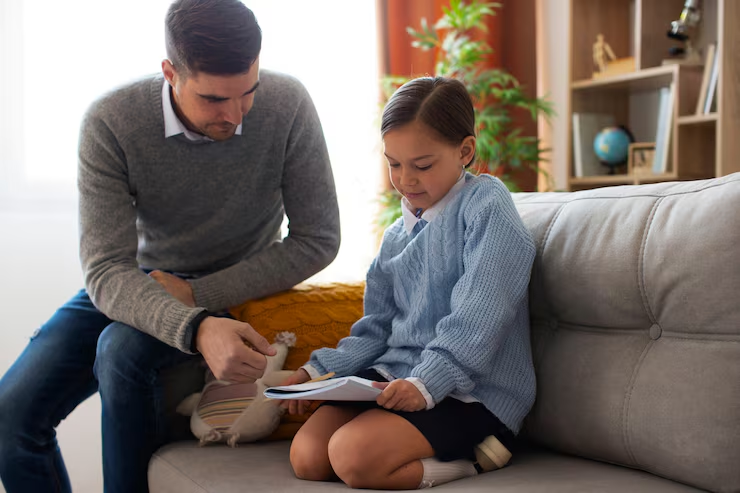
As parents, we all expect our children to experience challenges from time to time. Bad days, friendship struggles, academic stress, family conflict, and emotional ups and downs are all part of growing up.
However, there are times when a child may need additional support.
Many parents wonder whether what they are seeing is simply a phase or something that would benefit from professional counseling. They may notice changes in their child’s behavior, mood, relationships, or school performance but feel uncertain about whether therapy is necessary.
The truth is that counseling is not just for children experiencing a major crisis. Many children benefit from having a safe, supportive place to process emotions, develop coping skills, and build confidence before problems become more serious.
If you have been asking yourself whether your child might benefit from counseling, here are some signs worth paying attention to.
Understanding When Children Need Extra Support
Children do not always have the words to explain what they are feeling.
Unlike adults, they often communicate emotional distress through behavior. A child who is struggling emotionally may become more withdrawn, more irritable, more anxious, or more emotional without fully understanding why.
It is common to expect emotional difficulties to look obvious, but that is not always the case.
Some children continue earning good grades, participating in activities, and appearing successful while quietly struggling underneath the surface.
The goal is not to determine whether your child’s difficulties are “serious enough.” The goal is to recognize when additional support could help your child feel more confident, resilient, and emotionally healthy.
Your Child Seems More Anxious Than Usual
One of the most common reasons families seek counseling is anxiety.
Children who struggle with anxiety may:
- Worry excessively
- Frequently seek reassurance
- Have difficulty sleeping
- Experience headaches or stomachaches
- Avoid new situations
- Fear making mistakes
- Become overwhelmed by uncertainty
Anxiety often develops gradually. Parents may notice their child becoming increasingly hesitant, fearful, or emotionally reactive over time.
Counseling can help children learn practical coping skills while helping parents understand how to support them more effectively.
Your Child Is Having Frequent Emotional Outbursts
All children become upset from time to time.
However, if emotional outbursts are becoming more intense, more frequent, or harder to manage, it may be worth exploring what is happening beneath the surface.
Children often express emotional pain through:
- Anger
- Irritability
- Defiance
- Crying
- Meltdowns
- Emotional shutdowns
Sometimes these behaviors are connected to anxiety, stress, grief, family changes, low self-esteem, or difficulty regulating emotions.
Through counseling therapy, children better understand their feelings and develop healthier ways to express them.
Your Child Has Experienced a Major Life Change
Children are often deeply affected by changes in their environment.
Some examples include:
- Divorce or separation
- Moving to a new home
- Changing schools
- Blended family adjustments
- Loss of a loved one
- Serious illness
- Family conflict
Even positive changes can feel stressful for children.
Young people often thrive when given a neutral, supportive space where they can process these experiences and learn healthy ways to adapt.
Your Child Is Struggling at School
School difficulties are often one of the first signs that something may be wrong.
You may notice:
- Declining grades
- Difficulty concentrating
- School avoidance
- Increased anxiety about assignments
- Perfectionism
- Frequent visits to the nurse
- Trouble completing work
While academic struggles can have many causes, emotional health often plays an important role.
When children are overwhelmed by anxiety, stress, depression, or family concerns may find it difficult to focus on learning.
Your Child Seems Sad More Often Than Happy
Children naturally experience sadness.
However, ongoing sadness may be a sign that your child needs additional support.
Warning signs may include:
- Loss of interest in activities
- Low motivation
- Social withdrawal
- Frequent crying
- Negative self-talk
- Increased irritability
- Changes in sleep or appetite
Depression in children does not always look like sadness. Sometimes it appears as anger, frustration, boredom, or withdrawal.
Early intervention can make a significant difference.
Your Child Has Low Self-Esteem
Many children struggle with confidence at certain stages of development.
However, persistent low self-esteem can affect nearly every area of a child’s life.
Children with low self-esteem may:
- Criticize themselves frequently
- Focus on their mistakes
- Avoid challenges
- Compare themselves to others
- Believe they are not good enough
- Struggle to accept compliments
Counseling can help children develop a healthier self-image while learning to recognize their strengths and abilities.
Your Child Has Difficulty Making or Keeping Friends
Relationships play a major role in children’s emotional well-being.
If your child consistently struggles with friendships, it may be helpful to explore whether anxiety, social skills difficulties, low confidence, or other emotional concerns are contributing to the problem.
Some signs include:
- Social isolation
- Frequent friendship conflicts
- Fear of social situations
- Difficulty joining groups
- Excessive worry about what others think
Children often feel tremendous relief when they learn the skills needed to build healthy, supportive friendships.
Your Child Has Experienced Trauma or a Difficult Event
Children process difficult experiences differently than adults.
Events such as:
- Divorce
- Loss
- Accidents
- Bullying
- Medical procedures
- Exposure to conflict
- Other stressful experiences
can have lasting emotional effects.
Play therapy and counseling can help children process difficult experiences in a safe and developmentally appropriate way.
You Have a Gut Feeling Something Is Not Right
Parents often know their children better than anyone else.
Sometimes there is no single dramatic event or obvious symptom.
Instead, parents simply notice that something feels different.
Maybe your child seems less happy than usual.
Maybe they seem more withdrawn.
Maybe they are struggling in ways that are difficult to explain.
Trusting your instincts as a parent is important.
You do not need to wait for a crisis before seeking support.
What Happens During Child Counseling?
One of the biggest misconceptions about counseling is that children need to know exactly what is wrong before attending therapy.
They do not.
The counseling process begins with understanding the child’s strengths, challenges, and experiences.
For younger children, play therapy is often used to help them express thoughts and feelings through play.
Older children and teens may participate in traditional talk therapy while learning coping skills, emotional regulation strategies, communication skills, and problem-solving techniques.
Parents are also an important part of the process and often receive guidance on how to best support their child at home.
Frequently Asked Questions
How do I know if my child needs counseling?
If emotional, behavioral, social, or academic concerns are affecting your child’s daily life, counseling may be helpful.
What age should a child start therapy?
Children can benefit from counseling at many different ages. Some children begin therapy during early childhood, while others seek support during adolescence.
Is counseling only for serious problems?
No. Counseling can help children manage everyday stressors, build coping skills, improve confidence, and strengthen emotional well-being.
Can play therapy help my child?
Yes. Play therapy allows children to communicate and process emotions in ways that are natural and comfortable for their developmental stage.
Should I wait and see if things improve?
Some challenges do improve over time. However, seeking support early often prevents problems from becoming more severe and gives children valuable tools they can use throughout life.
Final Thoughts
Every child faces challenges.
Rather than trying to eliminate every struggle from your child’s life, aim to ensure they have the support, skills, and resources needed to overcome those challenges successfully.
If you have been wondering whether your child may benefit from counseling, trust that asking the question is already a sign that you care deeply about their well-being.
No child has to struggle alone, and no parent has to figure it all out by themselves.
Recognizing when your child may need support is an important first step, but knowing how to respond is just as valuable. Start with School Anxiety in Children.
At Amy Brown Counseling, we provide virtual counseling and online play therapy for children, teens, adults, and families throughout Missouri. We also offer limited in-person sessions in Chesterfield. Our therapists work with children experiencing anxiety, depression, grief, family changes, behavioral concerns, self-esteem challenges, and more.