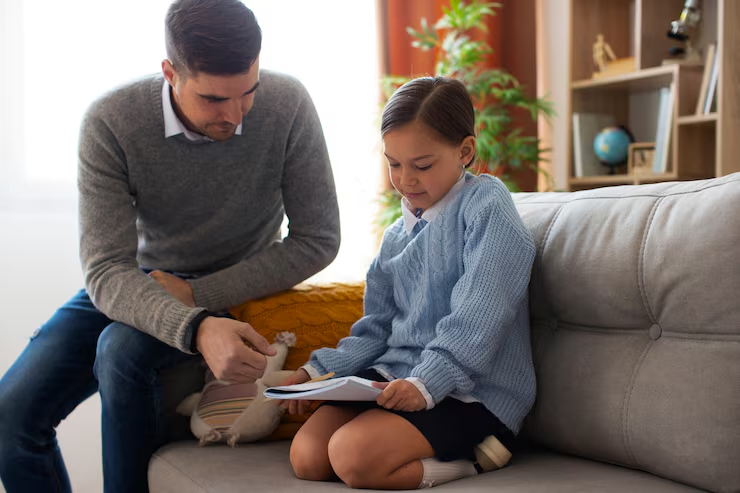
When adults are struggling, they often talk about their thoughts, feelings, and experiences. They can usually describe what is bothering them and ask for help.
Children are different.
Most children do not yet have the emotional vocabulary, insight, or communication skills to fully explain what they are experiencing. Instead, they often express themselves through behavior, imagination, creativity, and play.
This is where play therapy comes in.
Play therapy is a highly effective form of counseling that allows children to express emotions, process difficult experiences, develop coping skills, and work through challenges using their natural language of play.
As a therapist who has worked with children and families for more than twenty years, I often explain to parents that play is not simply something children do for fun. Play is one of the primary ways children learn, communicate, solve problems, build relationships, and heal from difficult experiences.
Understanding how play therapy works can help parents determine whether it may be beneficial for their child.
What Is Play Therapy?
Play therapy is a specialized form of counseling designed specifically for children.
Rather than relying entirely on conversation, play therapy uses toys, games, art materials, creative activities, storytelling, role-playing, and other developmentally appropriate techniques to help children express themselves.
Children often communicate feelings through play that they cannot yet explain with words.
For example, a child experiencing anxiety may repeatedly create scenarios involving danger, safety, or rescue. A child coping with divorce may act out family relationships through imaginative play. A child struggling with grief may use play to explore feelings of loss and sadness.
Virtual Play therapy provides a safe and supportive environment where children can express these experiences while developing healthier ways of coping.
Why Is Play So Important for Children?
Play is often viewed as a break from learning.
In reality, play is one of the most important ways children learn.
Through play, children develop:
- Problem-solving skills
- Emotional regulation
- Social skills
- Creativity
- Communication skills
- Self-confidence
- Resilience
- Flexibility
Play allows children to experiment, make mistakes, practice new skills, and explore emotions in ways that feel safe and natural.
When children encounter stress, change, or emotional challenges, play often becomes one of their most effective tools for processing those experiences.
How Does Play Therapy Work?
Many parents are curious about what actually happens during a play therapy session.
While every therapist works differently, play therapy sessions often include activities such as:
- Creative play
- Art activities
- Storytelling
- Sand tray activities
- Games
- Puppets
- Role-playing
- Therapeutic conversations
The therapist carefully observes the child’s behavior, emotions, communication patterns, and interactions throughout the session.
The goal is not simply to keep children entertained.
The goal is to help children explore emotions, build coping skills, increase self-awareness, improve emotional regulation, and develop healthier ways of responding to challenges.
What Issues Can Play Therapy Help With?
Play counseling can be helpful for many emotional, behavioral, and social concerns.
Some of the most common reasons families seek play therapy include:
Anxiety
Children experiencing anxiety often struggle with worries, fears, perfectionism, separation concerns, or difficulty coping with uncertainty.
Play therapy helps children identify feelings, develop coping skills, and build confidence.
Divorce and Family Changes
Changes within the family can feel overwhelming for children.
Play counseling provides a safe place to process emotions related to divorce, separation, co-parenting arrangements, blended families, and other major transitions.
Grief and Loss
Children often experience grief differently than adults.
Play therapy can help children express sadness, confusion, anger, and other emotions associated with loss.
Behavioral Concerns
Children sometimes communicate emotional distress through behavior.
Play counseling can help address concerns such as:
- Emotional outbursts
- Defiance
- Aggression
- Difficulty following directions
- Impulse control challenges
Trauma
Children who have experienced difficult or stressful events may struggle to process those experiences independently.
Play counseling can help children feel safer while developing healthy coping skills.
Self-Esteem Concerns
Children who struggle with confidence often benefit from opportunities to build emotional awareness, resilience, and self-acceptance.
How Does Play Therapy Help Children Express Feelings?
Many children simply do not have the words to describe complex emotions.
Imagine asking a seven-year-old to explain anxiety, grief, shame, frustration, or disappointment in detail.
Most children cannot do that yet.
However, they can often show those feelings through play.
Play creates emotional distance that allows children to safely explore difficult experiences.
A child may be reluctant to talk directly about their fears but may comfortably express those fears through a game, drawing, or imaginative story.
This process helps children feel understood while also helping therapists identify patterns and themes that may be contributing to emotional distress.
What Are the Benefits of Play Therapy?
Play therapy offers many benefits for children.
Some of the most common include:
Improved Emotional Regulation
Children learn to identify emotions, manage strong feelings, and respond more effectively to challenges.
Better Coping Skills
Children develop practical tools for managing anxiety, stress, frustration, sadness, and other emotions.
Increased Confidence
As children develop new skills and experience success, confidence often improves.
Improved Communication
Children become better able to express thoughts, needs, and feelings.
Stronger Relationships
Many children develop healthier relationships with parents, siblings, teachers, and peers.
Increased Resilience
Children learn that they can handle difficult situations and recover from setbacks.
Is Play Therapy Effective?
Research consistently supports the effectiveness of play therapy for many childhood concerns.
Children often experience improvements in:
- Anxiety
- Emotional regulation
- Social skills
- Behavior
- Self-esteem
- Family relationships
One reason play counseling is effective is that it meets children where they are developmentally.
Rather than expecting children to communicate like adults, play therapy uses methods that feel natural and comfortable for them.
What Is the Difference Between Play Therapy and Regular Play?
Parents sometimes wonder whether play therapy is simply playing with toys.
The answer is no.
While play counseling may look like play on the surface, there is a therapeutic purpose behind the activities being used.
Registered Play Therapists receive specialized training in child development, therapeutic play techniques, and the emotional needs of children.
The therapist intentionally uses play to help children process emotions, develop insight, and build healthier coping skills.
The goal is always growth, healing, and emotional development.
Can Play Therapy Be Done Online?
Yes.
Many parents are surprised to learn that online play counseling can be highly effective for children.
Virtual play counseling uses creative techniques adapted for the online environment while still allowing children to engage, express themselves, and develop coping skills.
Many families appreciate the convenience of participating from the comfort of home.
Online play therapy can be especially helpful for families throughout Missouri who may not have access to a local play therapist in their community.
Frequently Asked Questions
What age is play therapy best for?
Play counseling is commonly used with children, although specific approaches may vary depending on age and developmental level.
How long does play therapy take?
Every child is different. The length of treatment depends on the child’s needs, goals, and circumstances.
Can parents participate in play therapy?
Parents are often involved in the therapeutic process and may receive guidance on how to support their child at home.
Is play therapy only for children with behavioral problems?
No. Virtual therapy can help children experiencing anxiety, grief, family changes, trauma, self-esteem concerns, emotional difficulties, and many other challenges.
Does playing virtual counseling really work?
Research shows that play counseing can be highly effective in helping children improve emotional regulation, coping skills, communication, and overall well-being.
Final Thoughts
Children experience stress, worry, grief, frustration, and emotional pain just like adults do. The difference is that children often express those experiences through behavior and play rather than words.
Play therapy honors the way children naturally communicate and learn.
Through play, children can explore emotions, develop coping skills, process difficult experiences, and build confidence in a safe and supportive environment.
Now that you understand what play therapy is and why it is so effective, learn how these same therapeutic techniques can be successfully adapted for virtual sessions in Online Play Therapy for Children Ages 7 and Up.
Every child deserves a safe place to be heard, understood, and supported as they grow.
At Amy Brown Counseling, we provide virtual counseling and online play therapy for children, teens, adults, and families throughout St. Louis and the state of Missouri. We also offer limited in-person sessions in Chesterfield. Our therapists support children experiencing anxiety, depression, grief, family changes, emotional regulation challenges, self-esteem concerns, and more.