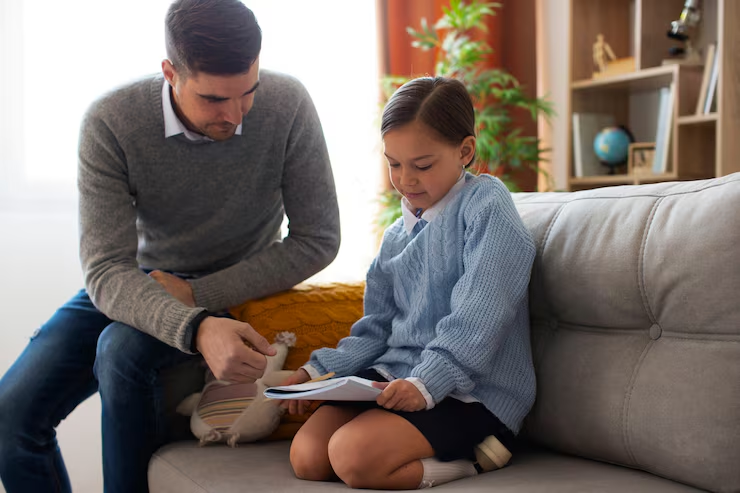
Every child experiences big feelings.
Children feel anxious before a test, angry when something feels unfair, sad when they lose a friend, frustrated when they make a mistake, and overwhelmed when life feels uncertain.
The challenge is that children often do not have the words to explain these emotions.
As adults, we can usually tell someone when we feel stressed, worried, disappointed, or hurt. Children are still developing those skills. Many communicate their feelings through behavior instead.
A child who feels anxious may become clingy. A child who feels overwhelmed may have a meltdown. A child who feels sad may become withdrawn. A child who feels angry may lash out at others.
Parents often recognize that their child is struggling but are unsure how to help.
This is one of the reasons play therapy can be so effective.
Play therapy provides children with a safe and supportive environment where they can express emotions, process experiences, and develop healthy coping skills using the language they know best: play.
Why Children Struggle to Express Their Feelings
Children are not born knowing how to identify and communicate emotions.
Emotional awareness develops gradually throughout childhood.
Many children struggle to answer questions such as:
- Why are you upset?
- What are you worried about?
- What happened today?
- How are you feeling?
Not because they are unwilling to answer, but because they genuinely do not know.
Even adults sometimes struggle to put emotions into words.
Children often communicate through:
- Behavior
- Imagination
- Creativity
- Play
- Art
- Movement
This is completely normal and developmentally appropriate.
Play therapy allows therapists to meet children where they are rather than expecting them to communicate like adults.
What Are “Big Feelings”?
Parents often hear therapists talk about helping children manage big feelings.
Big feelings are emotions that feel overwhelming, confusing, or difficult for a child to handle independently.
Examples include:
Anxiety
Children may worry about:
- School
- Friendships
- Family members
- Making mistakes
- New experiences
Anger
Anger often appears when children feel frustrated, hurt, embarrassed, scared, or misunderstood.
Sadness
Children may experience sadness following loss, disappointment, friendship struggles, family changes, or other life events.
Grief
Children process grief differently than adults and may move in and out of feelings quickly.
Fear
Fear is a normal emotion, but some children struggle with fears that interfere with daily life.
Frustration
Children frequently become frustrated when tasks feel difficult or when situations do not go as expected.
All of these emotions are normal.
The goal is not to eliminate difficult feelings. The goal is to help children learn how to understand and manage them.
How Play Helps Children Communicate
Think about how children naturally play.
They create stories.
They act out scenarios.
They build worlds.
They assign roles to toys and characters.
They replay situations repeatedly.
These activities are not random.
Play often reflects what children are thinking, feeling, learning, and processing.
For example:
- A child experiencing anxiety may repeatedly create rescue scenarios.
- A child adjusting to divorce may use dolls or action figures to act out family situations.
- A child coping with grief may create stories involving separation and reunion.
Through play, children often communicate emotions they cannot yet describe verbally.
How Play Therapy Helps Children Process Emotions
Play therapy creates a safe space where emotions can be explored without pressure.
It Reduces Emotional Defensiveness
Many children become uncomfortable when asked direct questions about feelings.
Play creates emotional distance.
Children often feel safer expressing emotions through characters, stories, or activities than discussing them directly.
It Helps Children Feel Understood
One of the most healing experiences for any child is feeling understood.
When a therapist recognizes themes and emotions within a child’s play, children often feel seen without needing to explain everything perfectly.
It Creates Opportunities for Emotional Growth
Play therapy allows children to practice:
- Problem-solving
- Emotional regulation
- Communication skills
- Frustration tolerance
- Flexibility
- Confidence
These skills help children navigate challenges both inside and outside of therapy.
How Play Therapy Helps Children Manage Anxiety
Anxiety is one of the most common reasons parents seek counseling.
Anxious children often struggle to explain what is worrying them.
Sometimes they do not fully understand it themselves.
Play therapy helps children:
- Identify worries
- Understand emotions
- Practice coping skills
- Develop confidence
- Reduce avoidance behaviors
As children gain emotional awareness, anxiety often becomes more manageable.
How Play Therapy Helps Children Process Divorce and Family Changes
Family changes can create uncertainty and emotional stress for children.
Children may experience:
- Confusion
- Sadness
- Anger
- Fear
- Loyalty conflicts
- Worry about the future
Play therapy sessions give children a safe place to express these emotions without feeling responsible for protecting adults’ feelings.
Children often process family transitions more effectively when they have a supportive environment where their feelings are welcomed and understood.
How Play Therapy Helps Children With Anger
Many parents seek help because their child seems angry all the time.
In reality, anger is often only part of the story.
Underneath anger, children may be experiencing:
- Anxiety
- Hurt
- Embarrassment
- Sadness
- Fear
- Frustration
Play therapy helps children identify what is driving their anger while teaching healthier ways to express emotions.
Rather than simply focusing on stopping angry behavior, therapy helps children understand the feelings underneath it.
How Play Therapy Builds Emotional Regulation
Emotional regulation refers to a child’s ability to manage feelings in healthy ways.
Children who struggle with emotional regulation may:
- Have frequent meltdowns
- Become easily overwhelmed
- React impulsively
- Have difficulty calming down
Play therapy provides opportunities to practice emotional regulation in real time.
Children learn:
- How emotions work
- How to recognize emotional triggers
- How to calm their bodies
- How to cope with frustration
- How to recover from mistakes
These skills benefit children throughout life.
The Importance of Feeling Safe
One of the most important parts of play therapy is creating emotional safety.
Children are far more likely to express vulnerable emotions when they feel:
- Accepted
- Respected
- Understood
- Supported
Healing often begins when children realize they do not have to hide their feelings.
A safe therapeutic relationship allows children to explore emotions without fear of criticism, punishment, or judgment.
Frequently Asked Questions
Why do children express emotions through play?
Play is a child’s natural language. It allows children to communicate experiences, thoughts, and feelings in developmentally appropriate ways.
Can play therapy help children with anxiety?
Yes. Play therapy can help children identify worries, develop coping skills, and build confidence in managing anxiety.
Is play therapy only for younger children?
Play therapy is commonly used with children, although approaches vary based on age, developmental level, and individual needs.
How long does it take for play therapy to work?
Every child is different. Progress depends on the child’s needs, goals, participation, and circumstances.
What emotions can play therapy help with?
Play therapy can help children process anxiety, anger, sadness, grief, fear, frustration, family changes, self-esteem concerns, and many other emotional challenges.
Final Thoughts
Children experience the same emotions adults do, but they often express them differently.
When children struggle to communicate through words, play can become a powerful pathway to understanding and healing.
Play therapy allows children to explore emotions, process difficult experiences, develop coping skills, and build confidence in a way that feels natural and safe.
Every child deserves a safe place where their feelings can be understood, respected, and supported.
Children are naturally wired to communicate through play, making it an important part of their emotional health and development. Discover why in Why Play Is Essential for Children’s Mental Health.
If you’ve wondered whether your own child could benefit from play therapy, our next article, Does My Child Need Play Therapy?, reviews common signs that it may be time to seek additional support.
Children are naturally wired to communicate through play, making it an important part of their emotional health and development. Discover why in Why Play Is Essential for Children’s Mental Health.
At Amy Brown Counseling, we provide virtual counseling and online play therapy for children, teens, adults, and families throughout St. Louis and the state of Missouri. We also offer limited in-person sessions in Chesterfield. Our therapists help children experiencing anxiety, emotional regulation challenges, grief, family changes, self-esteem concerns, anger, and other emotional difficulties.